Bandwidth Is Not the Bottleneck
A response to the investor thesis behind consumer brain implants

Bloomberg’s recent elegant piece on consumer brain implants reports that billionaires from Bezos to Gates to Musk are betting that thought-controlled computing, telepathic messaging, and merged human-AI cognition are not science fiction but a market timeline. The investors’ thesis rests on two assumptions that almost nobody in the public conversation is actually defending, and both appear incomplete.
The first is the bandwidth fallacy: that adding channels into and out of the brain will, by itself, make humans cognitively more capable. Consider the comparison evolution has already run for us. Bonobos and humans have effectively the same input-output bandwidth — eyes at similar frame rates, ears at similar dynamic range, hands with similar degrees of freedom, vocal tracts capable of similar acoustic ranges. What differs is internal architecture: more elaborated prefrontal cortex, expanded basal ganglia loops, scaled cerebellum, language-specific circuitry, the quasi-crystalline canonical circuits of thalamocortical and hippocampal-cortical systems multiplied and integrated. A bonobo with a perfect Neuralink remains a bonobo. The corticospinal tract sets a clock; saccades set a theta-reset metronome; membrane time constants and synaptic integration windows set throughput at one to two hundred Hertz. These are not focal bottlenecks awaiting better hardware. They are constitutive of how the entire embodied system computes. Adding USB ports to a von Neumann machine does not change the CPU.
The second is the wetware-efficiency fantasy: that biological computing substrates will dramatically lower the cost of cognition because the brain runs on twenty watts. The brain does. Organoids in dishes do not. The current DishBrain and Brainoware demonstrations route information through a pipeline that looks like this: digital encoder → stimulation → biological substrate → recording → digital decoder → output. The decoder is where the learning actually lives. The biology serves as a nonlinear, partially plastic intermediary contributing some pattern transformation. Until the field reports energy budgets that include the full digital pipeline and benchmarks against a properly scoped baseline (whether silicon or nonlinear non-biological polymers) doing the same task, the efficiency claim is theater. Biology earns its efficiency through architectural co-evolution of sensing, integration, behavior, metabolism in the entire body.
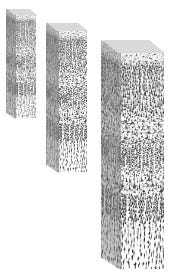
What would consumer cognitive augmentation actually require, if not more channels and not naive wetware? An architecture, not a bandwidth — a parallel substrate, properly endowed with the canonical circuits evolution has validated, that develops alongside the host brain over time. I describe what that would look like, and a near-term experimental path to derisk it, in a companion essay.